
Roundup Exposure and Your Legal Options
Despite Bayer’s large settlement announcements, thousands of Roundup lawsuits remain unresolved, and new cancer diagnoses continue to emerge every year. Scientific research, jury verdicts, and ongoing litigation all point to the same conclusion: Roundup (glyphosate) exposure may cause non-Hodgkin lymphoma and other blood cancers.
You may qualify for a Roundup lawsuit if you:
- Used Roundup at home, work, or on farms
- Were later diagnosed with non-Hodgkin lymphoma, Bcell leukemia, Tcell leukemia, or chronic lymphocytic leukemia (CLL)
- Have not previously participated in a Roundup settlement
If you or a loved one used Roundup and were later diagnosed with non-Hodgkin lymphoma or another related cancer, you may still be eligible to file a claim. Our team continues to represent individuals harmed by Roundup exposure, and we are actively reviewing new cases.
What Is Roundup?
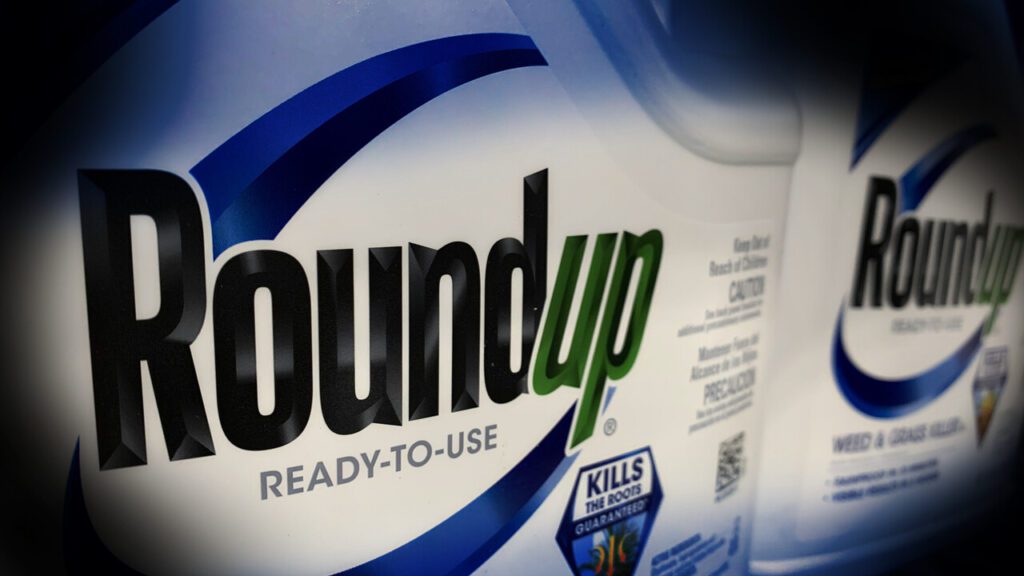
Roundup is the world’s most widely used herbicide and one of the most common weed killers used in agriculture, landscaping, and home gardening. Introduced by Monsanto in 1974 and acquired by Bayer in 2018, Roundup’s active ingredient is glyphosate, a chemical designed to kill weeds by blocking essential plant proteins.
Roundup is sold in dozens of formulations, including:
- Roundup Ready-to-Use
- Roundup for Lawns
- Roundup Max Control
Glyphosate use has surged over the past several decades, especially after the introduction of genetically modified crops engineered to tolerate the herbicide. Today, more than 1.4 billion pounds of glyphosate are applied globally each year, with roughly 100 million pounds used annually in the United States.
Does Roundup Cause Cancer?
In 2015, the International Agency for Research on Cancer (IARC)—part of the World Health Organization—classified glyphosate as “probably carcinogenic to humans.” This determination was based on evidence linking glyphosate exposure to non-Hodgkin lymphoma in agricultural workers in the U.S., Canada, and Sweden.
Health Risks Linked to Glyphosate Exposure
Research suggests glyphosate exposure may cause:
- Non-Hodgkin lymphoma (NHL)
- Bcell and Tcell leukemias
- Chronic lymphocytic leukemia (CLL)
- Developmental and reproductive issues
- Low birth weight and miscarriages
- Liver and kidney damage
Despite these findings, the U.S. Environmental Protection Agency (EPA) declined to classify glyphosate as carcinogenic in 2020, contradicting independent scientific reviews and multiple jury verdicts. Environmental groups have criticized the EPA for relying heavily on industrysubmitted studies rather than independent research.
Roundup Settlements and Ongoing Lawsuits
In June 2020, Bayer agreed to pay up to $10.9 billion to settle most Roundup cancer lawsuits. At that time, about 125,000 claims had been filed by people who said Roundup caused non‑Hodgkin lymphoma (NHL). Roughly 45,000 cases were resolved, but tens of thousands remained open.
Settlement amounts have varied widely often between $5,000 and $250,000 based on each person’s exposure and diagnosis. Many critics say these payments do not reflect the true cost of cancer care, lost income, or long‑term suffering. Despite ongoing lawsuits and scientific concerns, Bayer continues to sell Roundup without adding cancer warnings to the label. Because cancer can take years to develop, new Roundup claims are still being filed today.
Proposed Roundup Class Action Settlement (2026)
A proposed national class action settlement is now moving forward in Missouri for people exposed to Roundup or other glyphosate‑based products. Under this plan, Monsanto would fund up to $7.25 billion over 17–21 years through a court‑approved compensation program.
The settlement may cover:
People diagnosed with non‑Hodgkin lymphoma before March 5, 2026, who used Roundup for at least 16 hours or 10 days before February 17, 2026
People who meet the exposure requirements and may be diagnosed with NHL in the future
Claims would be reviewed by a court‑appointed administrator and placed into tiers, with payments based on exposure history and medical factors. The court has scheduled a Fairness Hearing for July 9, 2026, and the deadline to opt out or object is June 4, 2026.
Roundup Lawsuit FAQ
Meet Our Roundup Attorneys



Related News

Proposed Roundup Settlement: What You Need to Know
A proposed national class action settlement has been filed in Missouri involving Roundup weed killer…

Roundup Cancer Claims: Who Qualifies and How to File
If you used Roundup weed killer and were later diagnosed with nonHodgkin lymphoma or another…